Where corps of deep sea divers dare to go / STORY
La Spezia - They can dive to a depth of 300m below sea level to save sailors trapped in a submarine, recover a wrecked ship, repair a strategic methane pipeline or discover thousand-year-old treasure. They descend to a strange world where the sun’s light does not reach
Mariano Alberto Vignali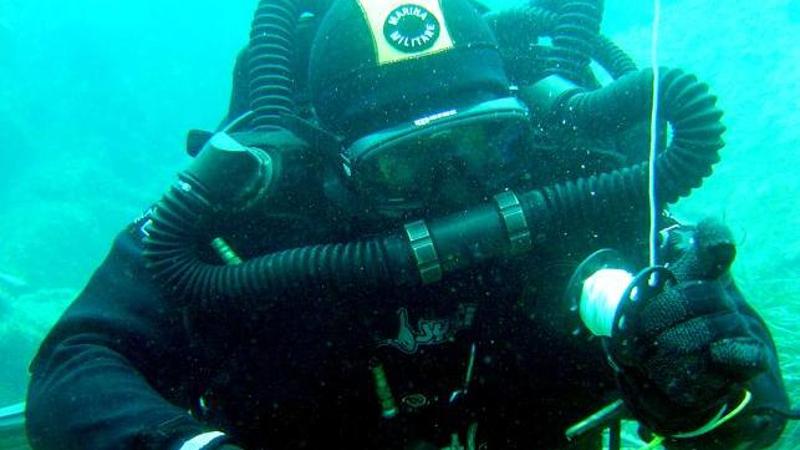
La Spezia - They can dive to a depth of 300m below sea level to save sailors trapped in a submarine, recover a wrecked ship, repair a strategic methane pipeline or discover thousand-year-old treasure. They descend to a strange world where the sun’s light does not reach, protected by a diving suit more complex than a space suit - it takes eleven weeks to learn to how use it - they can’t get anything wrong, because at those depths there is no margin for error. They are an elite unit that few of the world’s navies can afford, perhaps now only one of four, and they are the only one in the Mediterranean and in Europe. However, it is not only a matter of cost or investment; it’s a hundred-year old tradition that established the school and the right team.
This is why they boast record-setting standards and technical results: in an exercise, they completed a deep-sea rescue operation in forty minutes that would take other teams four hours. This elite unit is the Italian Navy’s ComSubIn deep-sea divers, who are trained to use a “rigid diving suit” for deep-sea diving, an Italian achievement that is envied by the world.
Only a few students pass the difficult course to become a deep-sea diver at the Varignano base near La Spezia, and of these, and after a number of years of experience, only a few can aspire to earn the licence to use this ultimate piece of equipment. There are so many constraints and it is so difficult to use, that this core of specialists is a sort of fraternity, looked upon with envy by most of NATO’s forces, which in recent years have tried and failed to create similar teams within their own diving units. It is not a job for everyone: besides having the right kind of physique (and the right measurements to get into the aluminium diving suit), one must have that special something that allows one to overcome obstacles and handle the work. “We are at extreme depths, alone, in the dark,” they say, even after years of experience, “but we have a team of ‘brothers’ who are just like us at our sides, all indispensable, and we trust each other without a doubt.
From the officer who controls the dive to the person who helps you into the diving suit or who remains at the console, they are all divers with the same special training, no one else can understand the peculiarities of such deep underwater operations.” It’s rare to be able to observe this special suit on a dive, and is not easy to get permission to do so on a wintry day in difficult conditions on board the “Anteo” (an old but functioning lady of the sea that is the floating home and operational base for the Italian deep-sea divers). The men cannot afford to make even one mistake, because at the bottom of the sea, a fatal error that took place during the long phase of putting on the diving suit or during mission preparation cannot be corrected.
One more person on the bridge, around the cranes or near the equipment, a voice or even a camera flash are distractions that can cause major problems. This is why their work is not well known. “There was a fishing boat that sunk to a great depth,” a marshal deep-sea diver explained at the end of an exercise, “with a sailor inside whom we had to return to his family. The Tyrrhenian Sea is deep and dark, it’s no joke, but we had to find him. It was a very demanding operation, but it was right for him to be returned.” The rigid articulated diving suit, or ADS (Atmospheric Diving Suit), has quite a few accessories: sonar, a camera, headlights. The connection to the surface is through an umbilical cord that only provides electrical power and allows the exchange of data and communication. Four propellers make it possible to move and in fact make the suit into a sort of mini-submarine. The life support system is based on three oxygen tanks and a soda lime capsule which removes the carbon dioxide from the air. But all the rest, every choice, every movement and every setting is done by the man in the suit, on his own. “Sometimes we are in there for six hours,” he explained, “hundreds of metres under water. Everything is different, you have to adapt to the suit, and it becomes part of you.”
I commenti dei lettori