MS Viking Grace, the “greenest” passenger ship in the world
Genoa - The beating heart of this technological and ecological gem has the name Wärtsilä on it, and has four 50DF, or dual-fuel, engines made at Rosandra’s Bagnoli plant in Trieste.
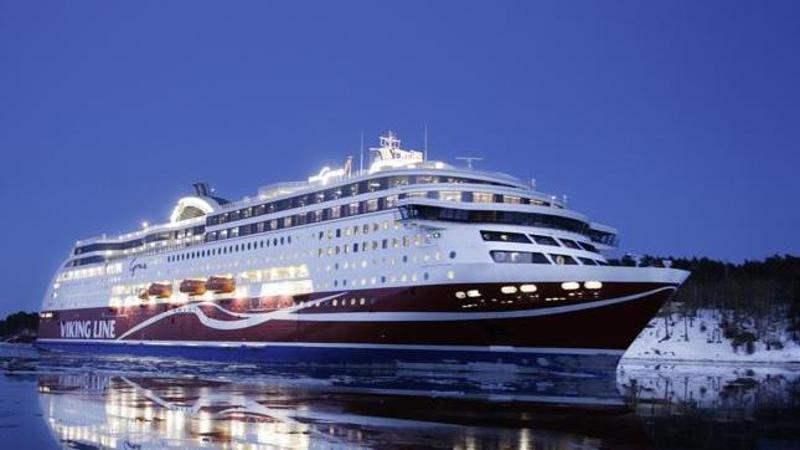
Genoa - You can’t quite call the Viking Grace a “ferry”. And the comfortable interiors with which the ship has been outfitted make it seem even less ferry-like. But anyone who boards the Viking Grace will be pleased by something more concrete and substantial than its beauty: the feel-good factor of sailing the Baltic Sea and knowing that you are not harming its delicate ecosystem. And what makes all this possible is LNG – liquefied natural gas - and as the Viking Grace shows, this is the only fuel that can truly reduce environmental impact. The beating heart of this technological and ecological gem has the name Wärtsilä on it, and has four 50DF, or dual-fuel, engines made at Rosandra’s Bagnoli plant in Trieste. Although these engines allow complete redundancy, that is they can switch from burning gas to another fuel at a moment’s notice, the Viking Grace burns gas exclusively on the Stoccolma-Turku-Mariehamn line because of the availability of the fuel in Stockholm and a perfectly orchestrated refuelling process.
A scow draws up to the ship, a hatch on the Viking Grace opens, and a tube is passed through and connected on the inside. The operation takes a total of 45 minutes, during which a safety curtain of water protects the hull from any possible gas leak, since the gas in its liquid form is stored at a temperature of -163° C. There are two tanks on board the ship, each of which holds 200 m3 of fuel, more than enough for the round-trip journey between the two ports. Safety is guaranteed by constant monitoring from gas detectors. The fuel pipes are double skinned and the tanks, located in the stern, are no longer threatening-looking objects, but rather appear as symbols of the “green” philosophy. What really counts in the end is that all that’s coming out of the smoke stack is little more than a tiny puff of water vapor.
Some of the shipping industry types who visited the ship (shipowners, shipyard technicians, etc.) were particularly struck by the engine room, which is absolutely odourless and with a level of cleanliness normally only found on board a yacht. The Viking Grace’s impressive cleanliness isn’t the product of elbow grease, of scrubbing away every trace of oil and fuel, nor from wearing overshoes on the deck. It’s simple the result of burning gas, pure and simple. The crew on board confirm it. They say that they are happy to be the pioneers of this kind of sailing, and to work with Wärtsilä. They haven’t run into any problems, and are very pleased with the positive image that this ship offers the entire shipping world.
The philosophy of respect for the environment, no longer a primarily Scandinavian preoccupation, is everywhere to be seen on board the ship, from recycling and separated waste collection, to ensuring the disposal of discharges only while at dock, to the elevators, which recover 70% of their energy expenditure when braking, to the use of materials, which when the ship is eventually scrapped, will reduce its negative impact on the environment to a minimum. Even the vegetable matter thrown away on board the ship is reused in order to produce biofuel.
In January, the Viking Grace’s first year in service will be celebrated, confirming the success of this project which Viking Line has backed so strongly. Wärtsilä is also very pleased to have provided nearly every element of this ship and with it some innovative features. Besides the prow and stern thrusters, the refuelling stations, the Gas Valve Units and the stainless steel propellers, the ship also has the first Compact Silencer System. This system reduces the perceived engine noise at 100 meters’ distance to approximately 50 dB. And last but not least, Wärtsilä produced the Cold Recovery System, which recovers some of the cold made by the LNG and reuses it in the ship’s air-conditioning system. Here are the figures: The ship’s SOx emissions are close to zero, NOx levels have been reduced by at least 80%, particulate emissions are practically non existent, and its C02 emissions are under 25%.
I commenti dei lettori