Port of Gioia Tauro, Ravano’s utopia turns 20
Gioia Tauro - On 15 September 1995, a container ship, the “Cmbt Concord”, made its first arrival at the container port of Gioia Tauro, beginning 20 years of operations. Gioia Tauro, while ranking fourth for container traffic in the Mediterranean, remains a controversial facility, in the middle of a difficult territory
Alberto Quarati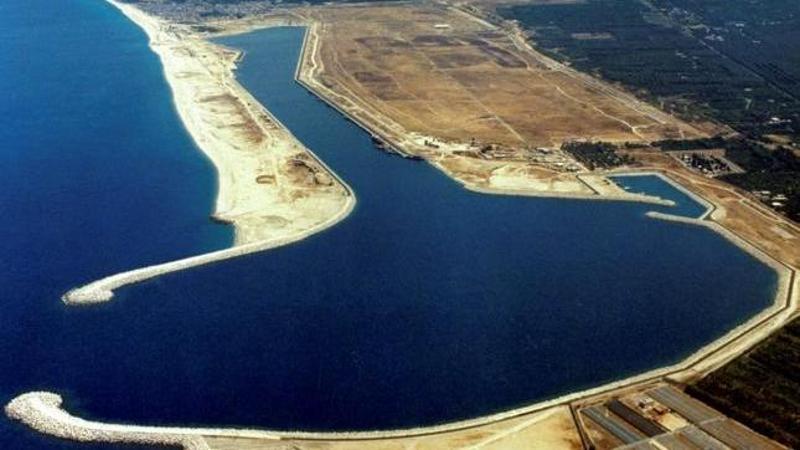
Gioia Tauro - On 15 September 1995, a container ship, the “Cmbt Concord”, made its first arrival at the container port of Gioia Tauro, beginning 20 years of operations. Gioia Tauro, while ranking fourth for container traffic in the Mediterranean, remains a controversial facility, in the middle of a difficult territory. Gioia Tauro represents one of Italy’s major entrepreneurial success stories. Its creator, Ligurian shipowner and banker Angelo Ravano, was indeed quite an unusual entrepreneur for his time.
Ravano, in fact, trained as a shipowner in London in the Fifties, and then established himself in Lugano, only to return to Italy 20 years later, having secured his first private concession (in 1971, the reform of the ports would come in ‘94). This was on the Fornelli pier of La Spezia port where he operated through the company he founded in 1968, Contship, the first modern container terminal. It was among the first firms that specialized in the transport of containers by ship, which was beginning to revolutionize shipping lines worldwide.
Ravano’s drive helped to open the way to an investment agreement with the Italian government in 1993, worth 285 billion lire. Having fallen ill, he died the following year, unable to see the facilities in operation, and incapable of clearing his name of rumours that he had joined the ranks of the local ’ndrangheta. What cannot be refuted today is that the Medcenter Container Terminal, at Gioia Tauro, is the largest private company in Calabria, and among the biggest in Southern Italy, with 1,300 employees and €340 million in investments, a facility the lack of which would have cost the state one trillion lire.
Technically, 2015 marks the 40th anniversary for the port of Gioia Tauro: April 25, 1975 and the then Minister of the South, Giulio Andreotti, laid the first brick of what was to be the fifth steel plant of the South, then a coal power plant, then for more than a decade a white elephant. Angelo Ravano, had the vision, while flying over that expanse of land jutting out into the sea, of the potential of that long natural quay and knew that it could be a great transhipment port: the exit ramp of a “maritime-freeway” bound for Northern Europe, or the gateway for the Mediterranean, at the centre of feeder routes across Italy, as indeed it has become.
A maritime complex from which, potentially, the entire traffic in the central Mediterranean could be controlled. The feverish development of the initial years, uneasiness on the part of the container port’s international partners, the threat posed by other transhipment ports, the mafia outside the gates, and sometimes in the hold, attempts to emulate the model throughout Italy and the dream of a special economic zone: these are some of its more recent travails. Not an easy life, but certainly unique, just like that of Angelo Ravano.
I commenti dei lettori